What Cannes Lions 2026 Taught Me: A First-Timer’s Perspective
Every June, the advertising, marketing and communications industry descends on a small city on the French Riviera to debate the biggest questions facing the sector. This year, most of those questions had the same answer sitting behind them – AI. But not in the way you might expect.
AI has moved on. The industry is catching up.
The conversation at Cannes this year was not about whether AI changes things. That debate, if it ever really existed, is over. What the week surfaced was where AI is actually falling short, and what does that mean for how we work?
The GWI Yacht panel, Less Artificial, More Intelligence, was one of the most candid conversations of the week for exactly that reason. The argument was not that AI is overhyped, but that AI built on shallow or unrepresentative data will consistently underperform, and that the industry’s data strategies have not kept pace with its AI ambitions. For communications professionals, that has a direct implication. The quality of the intelligence you put in still determines the quality of the work that comes out.
One stat that stayed with me was a personal LinkedIn post from a CEO typically generates eight times more engagement than a similar post from their company’s brand page. As that gap continues to grow, advisers increasingly need to help leaders balance creative authenticity and bravery with considered risk and opportunity management. AI can assist with execution, but judgement still feels very much human.
Why audiences trust creators more than brands
Another theme which surfaced throughout the week was the difference between reach and trust, and why brands increasingly need both but can only reliably build one of them over time.
The creator conversation at Cannes has evolved significantly. It is no longer about whether brands should work with creators, or even how to brief them well. Instead, the discussion has shifted towards understanding how creators are building lasting businesses and audiences that genuinely believe in them, in ways that brand campaigns rarely replicate.
Reach can be rented, but trust has to be earned. For financial services and professional services brands in particular, that distinction matters enormously. The organisations that understand this are moving from transactional creator relationships toward genuine partnerships built on shared values and consistent presence.
The standout moments of the week
The FT Live x People Like Us event was one of the standout moments of the week. Six speakers shared work they are proud of, followed by a panel hosted by Finola McDonnell, with panellists including Valerie Brandes, Trevor Robinson OBE and Frank Starling, unpacking how to navigate today’s increasingly complex geopolitical landscape. It was a room that genuinely reflected the world the industry is meant to be serving. Those conversations, specific, grounded, and honest about the structural barriers that still exist, tend to stay with you longer than the headline sessions.
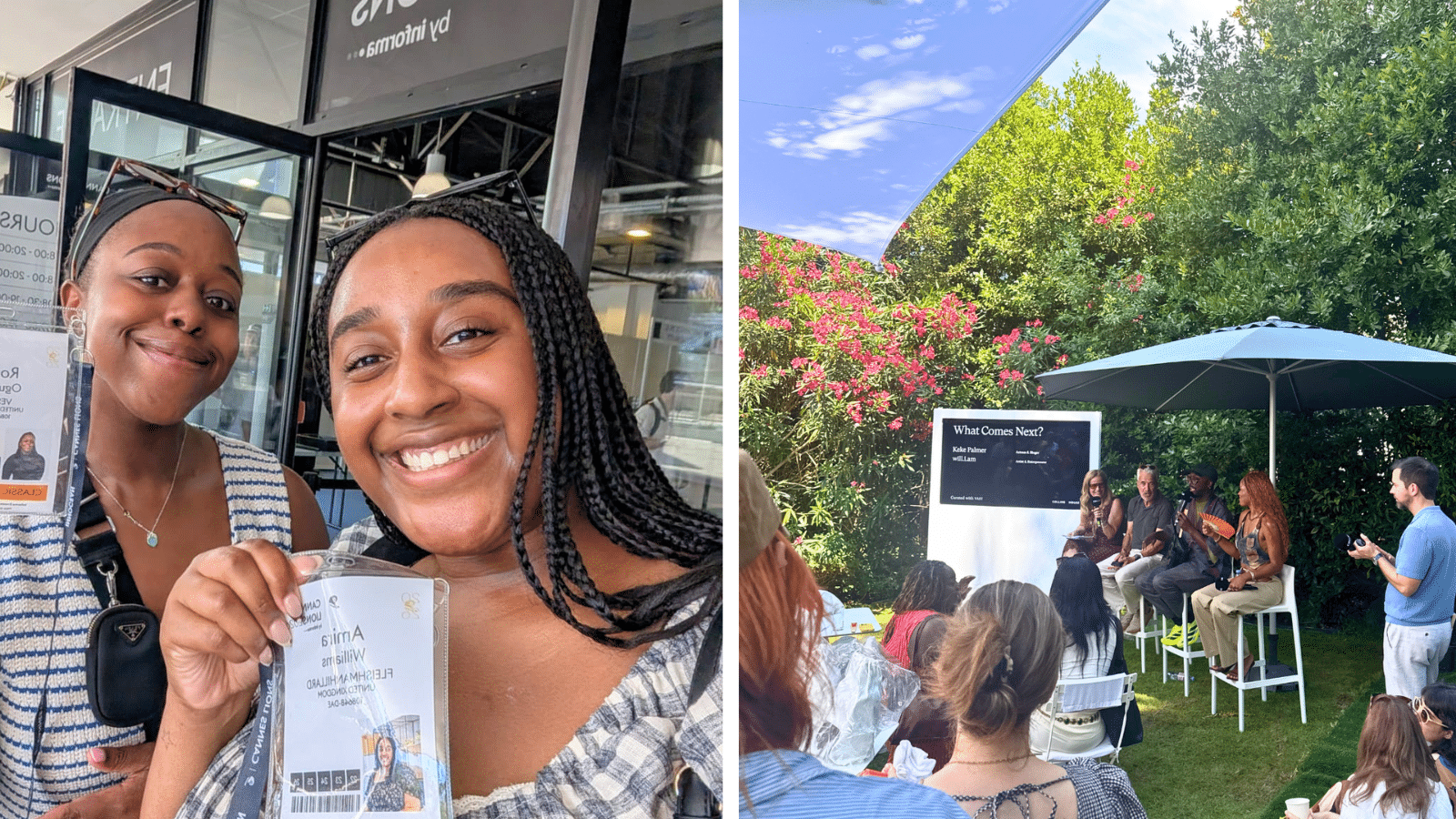
The will.i.am and Keke Palmer conversation at COLLINS House offered something different again. Two people who have built entire careers on their own terms, talking about creativity, identity, and what sustaining relevance actually requires. It was energetic, entertaining, and more instructive than expected.
What does this mean for communicators?
The week confirmed something that sits at the heart of good communications work. Audiences are increasingly sophisticated, the tools available to reach them are more powerful than ever, and none of that matters without clarity about what you are actually trying to say and why it should matter to the people you are trying to reach. Cannes accelerates the industry’s thinking. The job afterwards is working out what to do with it.